
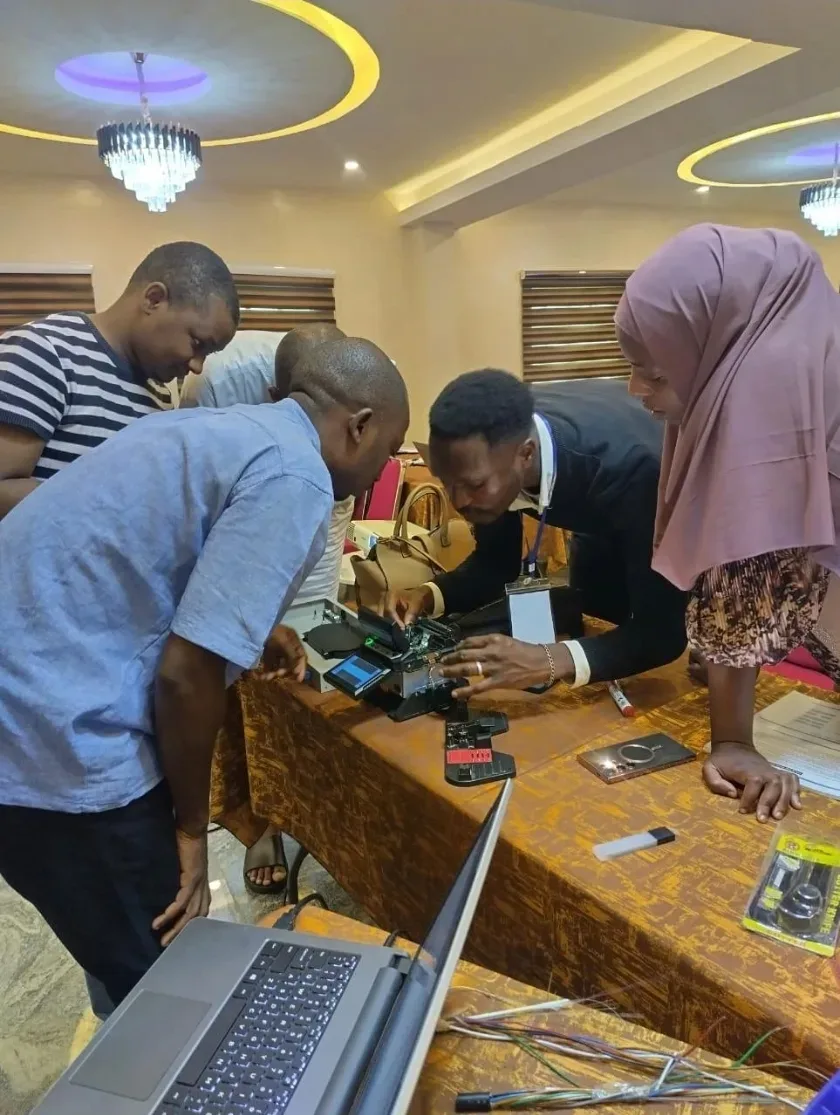

Fiber optic technician is one of the more overlooked career paths in Lagos' technology and telecommunications sector — overlooked mostly because most people assume it requires an engineering degree or years of prior technical experience. Neither is true. Fiber optic training is built to take complete beginners through cable theory, splicing, and testing in a matter of days, not years, and the demand for certified technicians keeps growing as internet infrastructure expands across Nigeria. This guide walks through exactly what beginner fiber optic training covers, what to look for in a provider, and what a realistic path from zero experience to your first certification looks like.
What Is Fiber Optics, and Why Is Demand Growing in Lagos?
Fiber optic cable carries data as pulses of light through thin strands of glass or plastic, rather than electrical signals through copper — which is why it can carry far more data, far faster, over longer distances. As internet service providers, telecom operators, and even individual estates and businesses in Lagos move away from copper infrastructure toward fiber-to-the-home (FTTH) and fiber-to-the-business networks, the need for technicians who can install, splice, and test that cable correctly has grown alongside it. Every new fiber rollout needs hands that know how to terminate a connector and read an OTDR trace — that's the job fiber optic training prepares you for.
Do You Need a Technical Background to Start?
No. This is the most common misconception that keeps people from even looking into fiber optic training. The entry-level certification in the field — CFOT, or Certified Fiber Optic Technician — is deliberately designed as a starting point, not an advanced credential. You don't need a background in electronics, telecommunications, or engineering to begin. What you do need is a willingness to work with your hands, follow precise procedures, and pay close attention to detail, since fiber optic work is unforgiving of shortcuts.
Is Fiber Optics a Good Fit for You?
Before committing time and money to any training, it's worth an honest self-check. Fiber optics work suits people who enjoy precise, repeatable hands-on tasks more than abstract problem-solving, who don't mind occasionally working outdoors or in confined equipment spaces, and who take safety procedures seriously rather than treating them as optional once they're comfortable. It's less suited to someone who specifically wants to work entirely from a screen, or who finds detailed, repetitive manual technique tedious rather than satisfying. Neither preference is better than the other — they're just different working styles, and being honest about which one describes you will save you from investing in training for a career that doesn't actually fit how you like to work.
What Beginner Fiber Optic Training Actually Covers
A proper beginner program — not just a crash course — walks through the following areas, usually in this order:
Fiber Optic Theory and Cable Types
How light actually travels through a fiber strand, the difference between single-mode and multi-mode fiber, and which cable types are used for which applications — the foundation everything else builds on.
Termination and Connectors
Hands-on practice terminating the connector types you'll encounter on the job — ST, LC, FC/SC and MT/RJ — since different networks and clients standardize on different connector families.
Fusion Splicing
The technique used to permanently join two fiber strands with minimal signal loss, using a fusion splicer — one of the core hands-on skills that separates a certified technician from someone who has only read about the process.
Testing With OTDR and Power Meters
How to use an Optical Time-Domain Reflectometer (OTDR) and optical power meter to test a fiber run, locate faults, and confirm a splice or installation meets signal-loss standards before it's signed off.
Outside Plant Installation and Safety
Practical outdoor and premises installation practices, along with the safety procedures specific to handling fiber optic cable and equipment — glass shards from stripped fiber are a real, easily overlooked hazard for untrained technicians.
How Long Does Fiber Optic Training Take?
This varies by provider and certification track, but entry-level CFOT training is typically delivered as an intensive, hands-on program over a few days rather than months — you're not sitting through a semester-long course. What matters more than the exact number of days is whether the time is spent hands-on with real equipment, rather than reviewing slides. A short program with heavy lab time will prepare you better than a longer one built mostly around theory.
A Day Inside Fiber Optic Training: What to Expect
Most beginners picture fiber optic training as sitting through lectures about how light travels through glass. In practice, a well-run program spends far more time at the workbench than at the whiteboard. A typical day starts with a short theory recap — maybe twenty minutes — before moving straight into hands-on practice: stripping and preparing cable, terminating connectors, then progressing to fusion splicing once the basics are consistent. By the middle of the program, most of the day is spent repeating these skills under closer-to-real conditions, including testing your own splices with an OTDR and correcting mistakes on the spot rather than being told about them abstractly.
This hands-on ratio is exactly why the length of a program matters less than how it's structured. A five-day program that's eighty percent lab time will prepare you better than a two-week program that's mostly slides — the actual muscle memory for termination and splicing only builds through repetition, not through watching someone else do it or reading about it.
Why Untrained or Informal Fiber Installation Work Is Risky
It's worth being direct about why accredited training matters beyond the certificate itself. A poor splice or termination doesn't fail loudly — it fails quietly, as intermittent signal loss or a connection that degrades over months rather than breaking outright. Untrained or informally trained installers can produce work that looks fine on the day it's completed but causes recurring problems for a client or employer long after the technician has moved on. Proper training, and specifically the OTDR testing component of it, is what teaches technicians to verify their own work meets a real signal-loss standard before calling a job finished, rather than assuming it's fine because the connection lit up.
What to Look for in a Fiber Optic Training Provider in Lagos
Not every "fiber optic training" advertised in Lagos leads to a credential anyone outside the classroom will recognize. Before enrolling anywhere, check for:
International accreditation — FOA (Fiber Optic Association) certification is recognized globally, not just locally.
A real training lab with industry-standard fusion splicers, OTDRs, and power meters — not just diagrams and video demonstrations.
Instructors who are themselves FOA-certified and have real field experience, not just classroom teaching experience.
A clear certification path beyond the entry level, in case you want to specialize further later.
Genuine hands-on practice time, not a program where you mostly watch someone else splice.
What the CFOT Certification Exam Actually Involves
The certification exam at the end of CFOT training typically combines two components: a written portion covering the theory you learned (fiber types, safety practices, how testing equipment works) and a hands-on practical portion where you demonstrate the actual skills — terminating a connector, performing a splice, or interpreting a test result correctly. This combination is intentional and is what separates FOA certification from a certificate earned purely by attending sessions or passing a multiple-choice quiz. You're being evaluated on whether you can do the work, not just describe it, which is exactly the standard employers are relying on when they see CFOT on a CV.
Because the practical component matters so much, the training leading up to the exam matters more than last-minute exam preparation. Students who treat the hands-on lab sessions seriously — repeating terminations and splices until they're consistent, not just until they work once — tend to walk into the practical exam with far less anxiety than students trying to cram technique in the final days.
Fiber Optics vs Other Entry-Level Technical Skills
If you're weighing fiber optics against other hands-on technical paths — hardware repair, general networking, web development — it's worth being honest about what makes fiber optics distinct. It's more specialized than general hardware repair, which means less immediate walk-in demand from individual customers, but it's tied directly to infrastructure investment that continues regardless of broader economic conditions, since internet providers and telecom operators need working fiber networks to operate at all. It also requires more precise, repeatable manual technique than most software-based paths, which suits people who specifically enjoy hands-on, physical work over sitting at a screen all day. None of this makes it objectively "better" than other technical paths — it makes it a genuinely different kind of work, worth choosing because it fits how you actually like to work, not just because demand exists.
Common Myths About Fiber Optic Training
"You need an engineering degree" — false; CFOT is an entry-level certification open to beginners.
"It's too technical for someone without an IT background" — the skills are learned hands-on during training, not assumed beforehand.
"Any local training counts the same" — accreditation matters; unaccredited certificates are rarely recognized outside the organization that issued them.
"It only leads to installation jobs" — certified technicians also move into network design, project supervision, and specialist roles over time.
Career Paths After Beginner Fiber Optic Training
Once you're CFOT certified, the typical path opens in a few directions: working directly as an installation or maintenance technician for a telecom operator or ISP, joining a contracting company that handles fiber rollouts for multiple clients, or eventually pursuing specialist FOA certifications (CFOS tracks) in areas like network design, FTTH, or outside plant work. Some technicians eventually move into independent contracting, taking on installation projects directly for businesses and estates once they've built enough field experience.
For a fuller breakdown of that path from certification through specialization, see our related guide, How to Become a Certified Fiber Optic Technician in Nigeria.
How to Prepare Before Your First Day of Training
You don't need to study fiber optics theory in advance — that's what the training itself is for — but a few small preparations make the first day noticeably smoother. Wear clothing you don't mind getting slightly dirty, since hands-on lab work involves handling cable and equipment directly. Bring a notebook, even if the provider gives you materials, since jotting down your own notes on technique tends to stick better than relying purely on handouts. If you wear glasses or have any known sensitivity to fine particles, mention it to your instructor on day one — stripped fiber produces small glass fragments, and proper safety practice (which you'll be taught) accounts for this, but it's worth flagging upfront rather than discovering it mid-session.
It also helps to walk in with realistic expectations about the learning curve. Your first few termination or splicing attempts will likely be inconsistent — that's normal and expected, not a sign you're unsuited to the work. Fusion splicing especially rewards patience over speed in the early stages; technicians who rush their first attempts to "keep up" typically develop worse habits than those who slow down and focus on consistency before speed. A good instructor will tell you this directly, but it's worth internalizing before you start, so early mistakes don't feel discouraging.
Fiber Optic Training at IMT Computers
IMT Computers is an official FOA Accredited Training Centre and Corporate Member (#718) based in Ikeja, Lagos, meaning our curriculum, instructors, and lab equipment are vetted directly by the Fiber Optic Association rather than being an in-house-only credential. Training is delivered hands-on, using industry-standard splicing and testing equipment, by FOA-certified instructors. We've trained over 700 students and professionals across our programs, including fiber optics, and CFOT remains the natural starting point for anyone beginning from zero.
Start with our CFOT (Certified Fiber Optic Technician) course, or see our full
Fiber Optics & FOA Certification service page for everything we offer beyond the entry level.
For more detail specifically on the CFOT credential — cost, curriculum, and career outlook — see our related post, What It Takes to Become a Certified Fiber Optic Technician (CFOT).
Frequently Asked Questions
Can a complete beginner really start fiber optic training with no prior experience?
Yes. CFOT, the entry-level FOA certification, is specifically designed for beginners. Training walks you through cable theory, termination, splicing, and testing from the ground up.
What equipment will I actually use during training?
Fusion splicers, OTDRs (Optical Time-Domain Reflectometers), optical power meters, and a range of connector types — the same equipment used in the field, not simulations.
Is FOA certification recognized outside Nigeria?
Yes. The Fiber Optic Association is an internationally recognized certifying body, and FOA credentials are accepted by telecom employers well beyond Nigeria — worth checking directly on the FOA website if you're curious how the certification is used globally.
How much does fiber optic training cost in Lagos?
Costs vary by provider, certification track, and current FOA exam pricing, so we don't publish a fixed number here — the most accurate way to get current pricing is to contact us directly.
What's the difference between CFOT and the CFOS specialist certifications?
CFOT is the foundational, entry-level certification everyone starts with. CFOS tracks (such as CFOS/D for network design or CFOS/H for FTTH) are specialist certifications you pursue after CFOT, once you've decided which area of fiber optics you want to focus on.
Can I do fiber optic training alongside a full-time job or school schedule?
Because entry-level training is delivered as an intensive, short program rather than a semester-long course, many students and working professionals complete it without needing to pause their existing schedule for long.
Is fiber optic technician work only available in Lagos?
No — while training and demand are strong in Lagos due to ongoing infrastructure expansion, certified technicians work across Nigeria wherever telecom operators and ISPs are extending fiber networks.
What's the very first thing I should do if I'm interested in fiber optic training?
Confirm the provider's FOA accreditation before anything else — ask for their membership or accreditation number directly. Everything else (schedule, cost, specific curriculum details) is easier to sort out once you've confirmed the certification will actually be recognized.
Do I need to buy my own tools or equipment for training?
No — an accredited training provider supplies the fusion splicers, OTDRs, connectors, and other equipment used during the program. You won't need to purchase your own equipment until you're working independently, if at all.
Fiber optics is one of the few technical fields where a beginner with no prior background can walk in, train hands-on for a matter of days, and walk out with an internationally recognized certification and a genuine career path. The main decision left is choosing a training provider whose accreditation and lab equipment you can actually verify, rather than taking a course listing at face value.
Ready to start? Contact IMT Computers to discuss training schedules, or explore our full range of programs on the
IMT Computers homepage. Whichever provider you eventually choose, the accreditation check outlined above is worth doing before you commit — it takes minutes and can save you from months of misplaced effort.
