
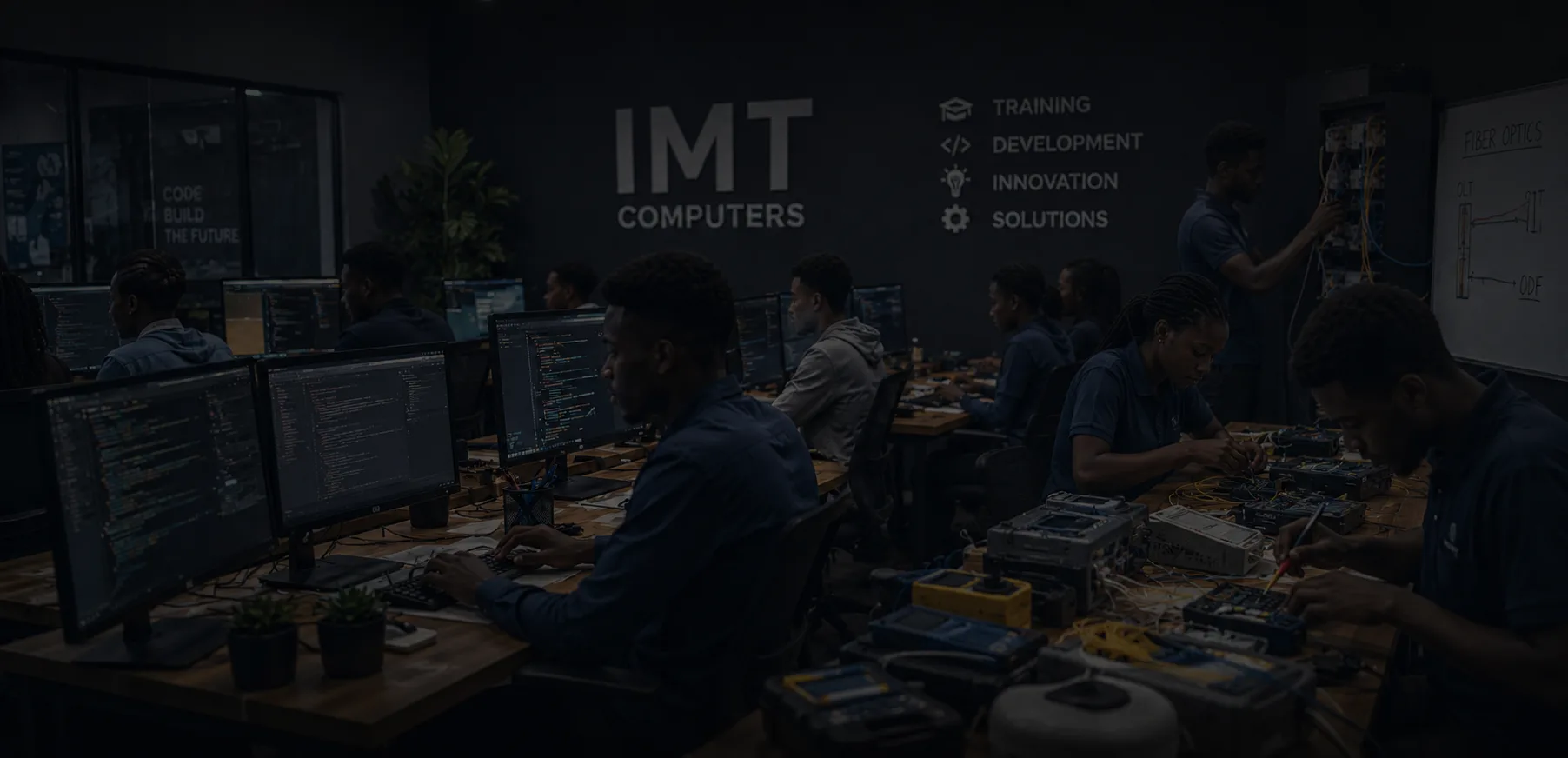

Most businesses only bring in ICT expertise after something has already gone wrong — a security incident, a system that can't scale, a costly rebuild of infrastructure that was never designed properly the first time. Expert ICT consulting exists to intervene before that point, and while it's easy to think of consulting as an added cost, the businesses that use it well typically save far more than they spend, by avoiding the far larger cost of expensive mistakes made without expert input.
There's a natural reluctance to pay for advice when the alternative — just making the decision yourself, or asking whoever's available internally — feels free. It isn't actually free; it just defers the cost to later, often at a much higher price, once a decision made without expert input turns out to have been the wrong one. This guide is about making that hidden cost visible before you pay it.
What ICT Consulting Actually Means
ICT consulting is expert advisory input into how a business plans, builds, and manages its technology — network infrastructure, software systems, security posture, and how all of it should scale as the business grows. It's distinct from simply hiring someone to install equipment; consulting happens earlier, at the decision-making stage, helping a business avoid costly missteps before money is spent building the wrong thing.
It's worth being clear about what consulting isn't, too — it isn't a substitute for implementation, and it isn't a one-size-fits-all package of recommendations applied regardless of the business asking. Good consulting is specific to your actual situation, informed by understanding your business's real constraints, not a templated report that could apply equally to any company in any industry.
The Real Cost of Making Technology Decisions Without Expert Input
Technology decisions made without expert guidance tend to fail quietly at first and expensively later. A network built without proper planning works fine at a small scale and then requires a disruptive, costly rebuild once the business grows past what it can handle. Software chosen without understanding long-term implications locks a business into a vendor relationship that's expensive to exit. None of these problems announce themselves clearly at the moment the decision is made — they surface months or years later, at a point where fixing them costs far more than getting expert advice upfront would have.
This delayed-cost pattern is precisely what makes ICT mistakes so easy to underestimate in the moment. The decision that eventually causes the most expensive problem rarely feels risky at the time it's made — it just feels like a normal, practical choice under time pressure, with the real cost only becoming visible much later, disconnected enough from the original decision that it's rarely traced back to it directly.
Where Expert ICT Advice Actually Saves Money
Avoiding Over-Building or Under-Building Infrastructure
Businesses without expert guidance tend to swing between two costly mistakes: over-investing in infrastructure far beyond current or realistic near-term needs, or under-investing in a way that requires an expensive emergency rebuild within a year or two. Expert consulting helps calibrate this correctly — building for realistic growth without either wasting money upfront or setting up a costly do-over down the line.
Avoiding Vendor Lock-In and Bad Long-Term Contracts
Technology vendors don't always structure their offerings with your long-term flexibility in mind. Expert advice helps a business spot contract terms, proprietary systems, or dependencies that will be expensive or difficult to exit later, before signing rather than after — a distinction that can save significant money if circumstances or needs change down the line.
Catching Security Gaps Before They Become Expensive Incidents
The cost of fixing a security gap before it's exploited is a small fraction of the cost of responding to an actual breach or data loss incident afterward — in remediation, downtime, and reputational damage. Expert review of a business's security posture, done proactively, is consistently one of the highest-return forms of ICT consulting available, precisely because it prevents costs rather than just managing them after the fact.
Avoiding Costly Duplicate or Conflicting Systems
Businesses without coordinated expert guidance sometimes end up with multiple systems doing overlapping jobs — different departments independently adopting tools that don't talk to each other, or paying for redundant software licenses nobody's tracking centrally. Expert consulting looks across the whole business rather than one department's immediate need, catching this kind of costly duplication before it becomes an entrenched, harder-to-unwind habit.
Planning for Growth Instead of Constant Rebuilds
A system designed with a business's realistic growth trajectory in mind avoids the repeated cycle of building something, outgrowing it, and rebuilding — each cycle costing more, in both money and disruption, than a single system designed properly from the start with future scale genuinely considered.
Why Timing an Engagement Matters as Much as Having One
Not every point in a business's growth calls for the same intensity of consulting engagement. A brand-new business with minimal infrastructure benefits most from lightweight, foundational advice — getting the basics right from day one rather than a deep, expensive review of something that barely exists yet. A business at a genuine inflection point — a major expansion, a new location, a significant increase in staff or data — benefits from a more thorough engagement precisely because the decisions being made now will be expensive to unwind later if they're wrong. Recognizing which category your business currently falls into helps calibrate how much to invest in consulting at any given moment, rather than either under-investing at a critical inflection point or over-investing when the stakes are still genuinely low.
The Difference Between Reactive and Proactive ICT Spending
Most businesses without access to expert ICT advice end up spending reactively — fixing problems only once they've already caused visible pain, upgrading systems only once they've clearly failed, addressing security only after an incident. This pattern is expensive not because any single reactive fix costs more than it should, but because reactive spending happens under pressure, on someone else's timeline, often with fewer good options available than if the same money had been spent proactively, on the business's own terms and timeline. Proactive ICT consulting shifts spending from a series of emergencies to a planned, sequenced investment — the same total spend, in many cases, but with dramatically less disruption and better outcomes along the way.
A Practical Example: The Cost of Skipping Consulting
Consider a growing business that decides, without expert input, to build a custom internal system to manage its operations — inventory, staff scheduling, client records — all in one tool, built quickly by whoever was available rather than someone with genuine experience architecting business systems. Eighteen months later, the business has outgrown what the system can handle, the original builder is no longer available to make changes, and no proper documentation exists explaining how it was built. The business now faces a costly, disruptive rebuild — exactly the outcome that a modest upfront consulting engagement, reviewing the plan before building began, would likely have prevented by flagging the scalability and continuity risks early, while they were still cheap to address.
This pattern repeats constantly across growing Nigerian businesses in slightly different forms — a network built without planning, software chosen without evaluating alternatives, a vendor contract signed without understanding the exit terms. In each case, the cost of the eventual correction dwarfs what proactive expert advice would have cost at the decision point.
Signs Your Business Would Benefit From ICT Consulting
You're about to make a significant technology investment — new infrastructure, new software — without a clear plan for how it fits your growth over the next few years
Your current systems were built informally, without anyone having assessed your actual requirements first
You're unsure whether your current security setup is actually adequate, or just assumed to be
You've outgrown a system faster than expected and are unsure whether to patch it or rebuild it
You're evaluating a major vendor contract and want an independent, expert read on the terms
Who Typically Benefits Most From ICT Consulting in Nigeria
In practice, the businesses that get the most value from ICT consulting in the Nigerian context tend to fall into a few recognizable categories: growing SMEs approaching a genuine scaling point, businesses in regulated industries with real compliance obligations around data handling, organizations managing multiple physical locations that need consistent infrastructure across all of them, and businesses that have already had at least one expensive technology mistake and are trying to avoid repeating the pattern. If your business fits any of these descriptions, the case for at least an initial consulting conversation is stronger than it might otherwise be.
What Questions a Good Consultant Actually Asks First
You can often gauge the quality of an ICT consulting engagement by the questions asked at the very start. A strong consultant asks about your business goals and growth plans before mentioning any specific technology — what are you trying to achieve over the next one to three years, not just what technical problem you're facing today. They ask about your budget constraints honestly, rather than assuming an unlimited budget and recommending accordingly. They ask who on your team will actually need to use and maintain whatever gets recommended, since a technically excellent solution that nobody on staff can operate isn't actually a good fit. A consultant who skips straight to recommending specific products or vendors without asking these foundational questions first is optimizing for a quick sale, not for your actual long-term interest.
How to Evaluate Whether ICT Advice Is Actually Independent
One risk worth being aware of: some "consulting" is really just a sales conversation for a specific vendor's product, dressed up as independent advice. Ask directly whether the consultant has a financial relationship with any vendor they're recommending, and be appropriately skeptical of advice that always seems to point toward the same product or platform regardless of the specific problem being discussed. Genuinely independent advice should sometimes recommend doing nothing, or recommend a competitor's product, or recommend a smaller investment than what was originally being considered — if every conversation ends in the same expensive recommendation, that's worth questioning.
A simple way to test this before committing to a paid engagement: ask a prospective consultant to name a situation where they recommended a client spend less, or do nothing at all, rather than pursue a bigger project. A consultant who can answer this specifically and confidently has demonstrated independence in practice, not just in theory.
What a Good ICT Consulting Engagement Actually Looks Like
It starts with genuinely understanding your business and current setup — not a generic checklist applied identically to every client — followed by clear, specific recommendations you can actually act on, not vague generalities. A good engagement also comes with honest tradeoffs laid out rather than a single option presented as the only choice, and it should leave you with a clearer, more confident understanding of your own technology decisions, not more dependent on the consultant to explain everything going forward.
A good engagement also ends with something concrete you can hold onto and refer back to later — a written summary of findings and recommendations, not just a verbal conversation you have to remember correctly weeks later when actually making the decision. This documentation also becomes useful if you bring in a different provider for implementation, since it gives them a clear, shared starting point rather than requiring you to explain your situation from scratch all over again.
ICT Consulting at IMT Computers
At IMT Computers, ICT consulting isn't a separate, generic service — it's built directly into how we approach network installation and infrastructure work: a proper site survey and needs assessment before any design begins, honest recommendations on what your business actually needs versus what would be over-building, and ongoing support advice as your organization grows. The same consulting-first approach applies to our fiber optic infrastructure work for telecom and enterprise clients.
See our Network Installation & ICT Infrastructure service for infrastructure planning and consulting, or our
Fiber Optic Installation & Consulting service for network design consulting specific to fiber projects.
If your consulting needs are more focused on your website or software, see our Website Development & Software Solutions service instead — the same consulting-first philosophy applies there too.
For more on the installation work this consulting typically leads into, see our related post, Network Installation Services in Nigeria, which covers what happens once the planning and advisory stage is complete.
Frequently Asked Questions
Is ICT consulting only useful before building something new, or can it help with existing systems too?
Both. It's often most valuable before a new investment, but a review of existing infrastructure can also catch inefficiencies, security gaps, or scaling risks in systems already in place.
How much does ICT consulting cost?
This depends on the scope of the engagement — a brief assessment versus a comprehensive infrastructure review are very different undertakings. Contact us directly with your specific situation for an accurate quote.
Is ICT consulting only for large organizations?
No — growing small and medium businesses often benefit the most, since they're at the stage where technology decisions made now will either support or hinder growth over the next several years.
Does ICT consulting mean I have to use the same provider for the actual implementation work?
Not necessarily, though many businesses find it more efficient to have consulting and implementation handled by the same team, since it avoids miscommunication between the advice given and the work actually carried out.
What's the difference between ICT consulting and just hiring an IT support technician?
IT support typically focuses on maintaining and fixing existing systems. ICT consulting focuses on the decisions before and around those systems — what to build, how to structure it, and how it should scale — a more strategic, planning-focused role.
Can ICT consulting help with choosing software, not just infrastructure?
Yes — good ICT consulting extends to major software and vendor decisions as well, not just physical network infrastructure.
The cost of expert ICT advice is almost always smaller than the cost of an expensive technology mistake made without it — the businesses that treat consulting as an investment rather than an avoidable expense tend to spend less overall, not more, once the full picture is accounted for. Bring in expert advice at the decision point, not the crisis point, and the entire cost equation shifts meaningfully in your favor — the earlier the conversation happens, the cheaper and less disruptive every downstream decision tends to be.
Considering a major technology decision? Contact IMT Computers before you commit, not after, or visit the
IMT Computers homepage to see our full range of services.
The businesses that build a habit of consulting before deciding, rather than after something breaks, tend to look back years later and struggle to point to a single dramatic technology crisis — not because they got lucky, but because the small, cumulative decisions along the way were made with expert input from the start.
A single conversation, at the right moment, is often all it takes to avoid a mistake that would have cost far more to fix than to prevent.
